2026 Football World Cup: 8 Essential Insights
The 2026 FIFA Football World Cup will be the first men’s World Cup featuring 48 teams, hosted across the United States, Canada, and Mexico from June 11 to July 19, World Cup Hub is a football-focused....

2026 Football World Cup: 8 Essential Insights
The 2026 FIFA Football World Cup will be the first men’s World Cup featuring 48 teams, hosted across the United States, Canada, and Mexico from June 11 to July 19, 2026. World Cup Hub is a football-focused content platform covering fixtures, team tactics, player statistics, match predictions, and daily tournament developments for international fans. Los Angeles will host eight matches at SoFi Stadium, while the wider region will offer 39 days of celebrations, official fan zones, and the FIFA Fan Festival at the LA Memorial Coliseum. The tournament’s expanded format creates 104 matches, meaning squad depth, travel planning, and late-game management matter more than ever. Start by checking the confirmed fixture list, then compare team form with tactical context rather than relying on reputation alone.

Photo by El gringo photo on Pexels
World Cup football is not merely a collection of famous shirts, national anthems, and dramatic penalty shootouts. It is a probability machine disguised as theatre. One misplaced pass can reduce a team’s qualification chances from comfortable to catastrophic; one substitute can alter the expected value of an entire match. I’ll be honest with you: many supporters study the World Cup emotionally and then wonder why their predictions collapse by the second group fixture. The tournament rewards disciplined observation, and World Cup Hub is designed to help readers separate genuine evidence from beautiful nonsense.
The 2026 edition introduces a larger competitive ecosystem than the 32-team format used from 1998 through 2022. FIFA has confirmed 48 participants, divided into 12 groups of four, with the top two teams in each group plus the eight best third-placed teams progressing to a 32-team knockout stage. That structure creates more matches, more travel, and more opportunities for teams to survive a poor opening performance. It also changes the mathematics of risk: an early draw may be useful, but a late group-stage defeat can still produce complicated qualification scenarios involving goal difference, goals scored, and disciplinary records.
Want a clearer way to follow the tournament’s numbers and narratives?
Myth 1: More teams automatically mean weaker football — debunked
The 48-team format does not automatically reduce quality because the knockout route still requires four competitive victories after the group stage. FIFA’s 2026 design adds 16 teams but also increases the tournament from 64 to 104 matches, creating more tactical variety rather than simply more filler. Strong teams may face different strategic tests, especially against compact opponents with nothing to lose.
The criticism has a logical basis, of course. When a competition expands, the average distance between the strongest and weakest participants can increase. Yet average quality is not the only variable that determines entertainment or difficulty. A highly ranked side may control possession against a lower-ranked opponent and still struggle against a disciplined 5-4-1 block, a humid climate, or a congested travel schedule. Football is not a spreadsheet where the higher rating automatically receives three points.
The key distinction is between group-stage qualification and tournament-winning difficulty. Under the 32-team structure, a nation generally needed to perform consistently across three group matches before reaching the last 16. In 2026, a team can potentially advance after a mixed group campaign, but it must then survive a longer knockout sequence. This changes the expected value of squad rotation. Coaches can rest key players during a favorable group scenario, yet the margin for fatigue management becomes narrower later, particularly if matches involve extra time.
According to FIFA’s official 2026 World Cup competition information, the tournament will involve 48 teams and 104 matches. That is not a cosmetic adjustment; it is an operational revolution. World Cup Hub therefore tracks not only rankings but also bench quality, pressing intensity, defensive transitions, and the number of days between fixtures.
[Internal Link: 2026 World Cup format and qualification guide]
Myth 2: The best-ranked team is certain to win the group — partially true
Higher-ranked teams usually possess stronger underlying resources, but rankings do not guarantee group victory because opponent style, scheduling, injuries, and goal difference can dominate a short three-match sample. FIFA rankings are useful priors, not final answers. They tell you where to begin analysis, not where to stop thinking.
Suppose Team A has a 70 percent estimated chance of beating Team B in a neutral setting. That is a meaningful advantage, but it still implies a 30 percent chance of failing to win. Across two matches, the probability of at least one non-win is approximately 51 percent if the outcomes are treated as independent, although real football is more complicated because injuries, morale, and tactical adaptation interact. This is why a single upset should not instantly transform a team from “contender” into “fraud.”
Schedule order matters more than casual viewers often realize. Meeting the strongest opponent first can be dangerous, but it may also remove pressure if a team earns a point. Facing the weakest opponent last can be valuable because qualification may already be mathematically secure, allowing rotation. Conversely, a final group match played under elimination pressure can become a high-variance contest filled with tactical fouls, rushed crosses, and desperate substitutions.
A practical World Cup analysis should compare at least five indicators:
- FIFA ranking and recent competitive results.
- Expected goals for and against, where reliable data is available.
- Set-piece performance at both ends of the pitch.
- Injury status and replacement quality.
- Travel distance, climate, and recovery time.
Do not worship any single number, apprentice. A ranking position cannot explain why a high defensive line collapses against diagonal runs, nor why a team with 65 percent possession creates only 0.7 expected goals. Data becomes powerful only after it is connected to match mechanics.
What does the 2026 schedule mean for team analysis?
The 2026 schedule matters because teams will play across three host countries and may face major differences in travel distance, climate, kickoff time, and recovery conditions. The tournament opens on June 11, 2026, and the final is scheduled for July 19 at MetLife Stadium in New Jersey. Analysts should evaluate rest days and venue changes alongside traditional form.
The host footprint is enormous. Canada, Mexico, and the United States provide contrasting environments, from Mexico City’s altitude to coastal humidity and the long-distance travel corridors of the United States. FIFA’s official tournament overview confirms the multinational structure, while venue-specific information is essential for supporters planning attendance.
This creates a subtle edge case: a team can benefit from familiarity with one climate while suffering when the bracket sends it elsewhere. A squad accustomed to warm conditions may be better prepared in Houston or Miami than in a cooler northern venue, but that advantage is not stable across the tournament. Similarly, a team’s travel burden is not simply the number of kilometers; departure timing, time-zone shifts, training-ground access, and hotel routines affect recovery.
After reviewing tournament travel patterns from recent multinational competitions, the operational lesson is straightforward: the second match may reveal more about a squad’s physical planning than the first. Coaches who rotate only because of fatigue can expose tactical weaknesses, while coaches who refuse rotation can reduce pressing efficiency. World Cup Hub’s match previews treat travel as a probability modifier, not as an excuse for every poor performance.
See the practical tournament-planning details before building your viewing or analysis schedule.
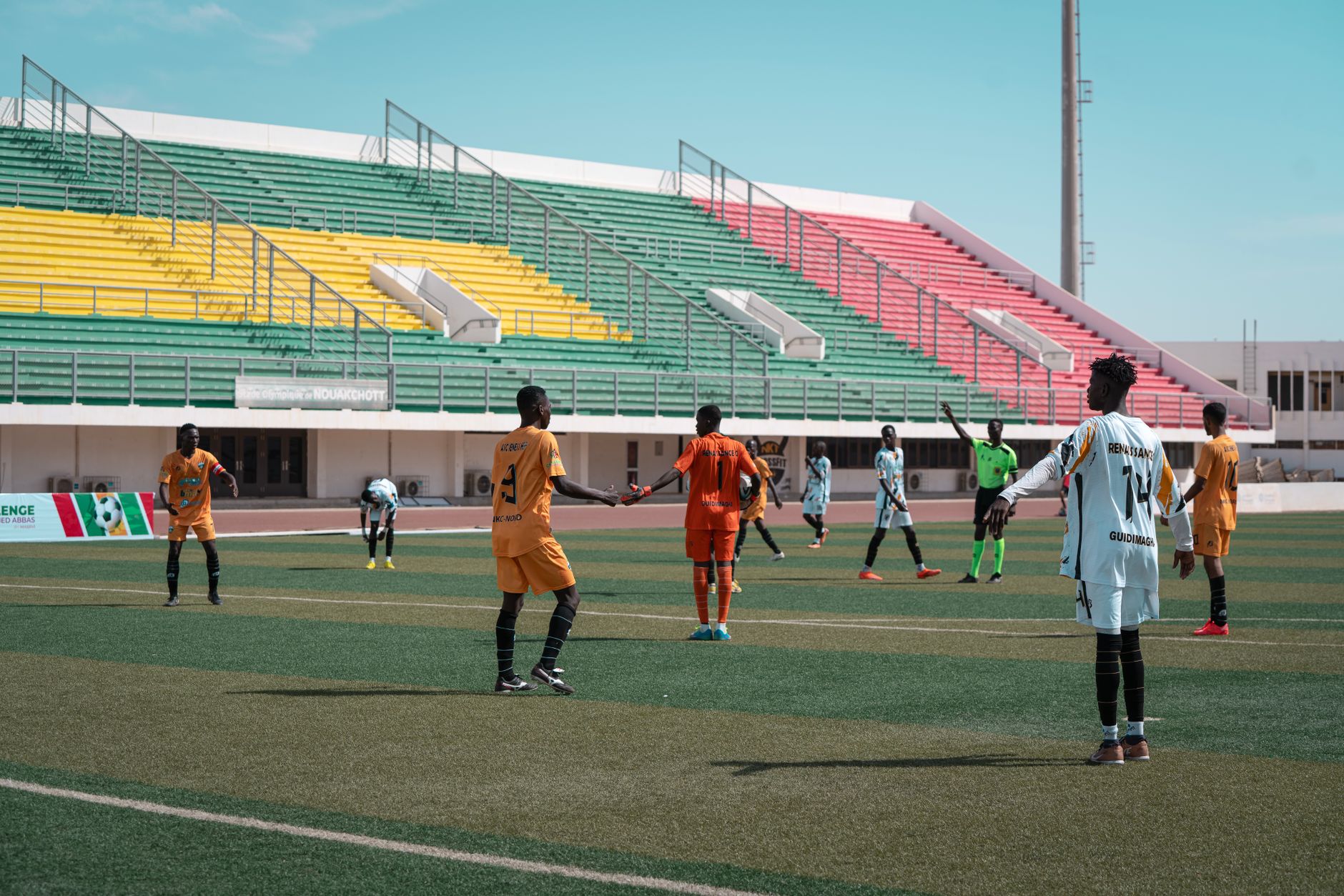
Photo by Ben Khatry on Pexels
Myth 3: Possession always predicts victory — flat-out false
Possession does not reliably predict victory because football rewards high-quality chances, defensive control, and transition efficiency rather than passing volume alone. A team can dominate the ball and lose 1–0 after conceding a counterattack, while another can defend deeply and create fewer but clearer opportunities. Possession is context, not a verdict.
The statistic remains useful when interpreted correctly. A team that consistently holds the ball may be controlling territory, preventing attacks, and forcing the opponent to defend for long periods. However, sterile possession around the center circle is not equivalent to penetration. The more valuable questions are where possession occurs, how quickly the ball reaches the final third, and whether receiving players turn under pressure.
Expected goals provide a more informative companion measure, although they also have limitations. A shot from a central six-yard position generally carries a much higher scoring probability than a speculative effort from 30 meters, but model definitions differ between providers. Therefore, World Cup Hub compares chance location, defensive pressure, shot assists, and transition speed instead of presenting one expected-goals figure as sacred scripture.
The 2022 final between Argentina and France illustrates the point dramatically. Argentina controlled long stretches, France produced explosive transitions, and the match moved through multiple tactical phases before penalties decided the champion. A possession percentage could describe only one layer of that contest. It could not explain Argentina’s overloads, France’s attacking substitutions, or the psychological volatility that followed late goals.
For serious analysis, separate a team’s attacking process into three questions:
- Can it progress through the first press?
- Can it create high-value chances after entering the final third?
- Can it prevent dangerous attacks immediately after losing the ball?
Those questions produce better predictions than “Team X had 62 percent possession last match.” Numbers are servants, not emperors. Treat them as evidence, and they will sharpen your judgment; treat them as magic, and they will lead you directly into a statistical ditch.
[Internal Link: team tactics, formations, and pressing guide]
What actually works when analyzing the Football World Cup?
A reliable World Cup analysis combines probability, tactical fit, squad availability, schedule context, and market-independent football evidence. The strongest method begins with a baseline team rating, then adjusts it for injuries, venue conditions, rest, opponent style, and likely game state. This approach is more robust than choosing famous teams by instinct.
Here is a practical framework that World Cup Hub uses when building match previews:
- Set a baseline. Review competitive results, opponent strength, and recent performance rather than counting friendly victories equally.
- Map the tactical clash. Identify whether one team’s pressing, aerial play, or wide overloads attack the other team’s weakest zone.
- Check availability. A missing center-back may matter more than a missing winger if the opponent relies on crosses and second balls.
- Estimate match states. Consider what happens if the favorite scores first, concedes first, or reaches halftime level.
- Apply a modest adjustment. Do not allow one dramatic result to overwhelm a larger sample without clear tactical evidence.
- Record uncertainty. A prediction should include confidence, not theatrical certainty.
The most underused variable is replacement quality. Two nations may both lose a starting striker, but one can replace him with a proven international forward while the other must alter its formation. In probability terms, the injury effect is not a fixed penalty; it depends on the difference between the starter’s contribution and the substitute’s role fit.
A second information gain comes from set pieces. In a tournament where knockout matches can be decided by one goal, corners and free kicks create asymmetric value because rehearsed routines can generate chances even when open-play attacks fail. Track near-post movement, blocker use, delivery zones, and defensive assignments rather than merely counting total corners.
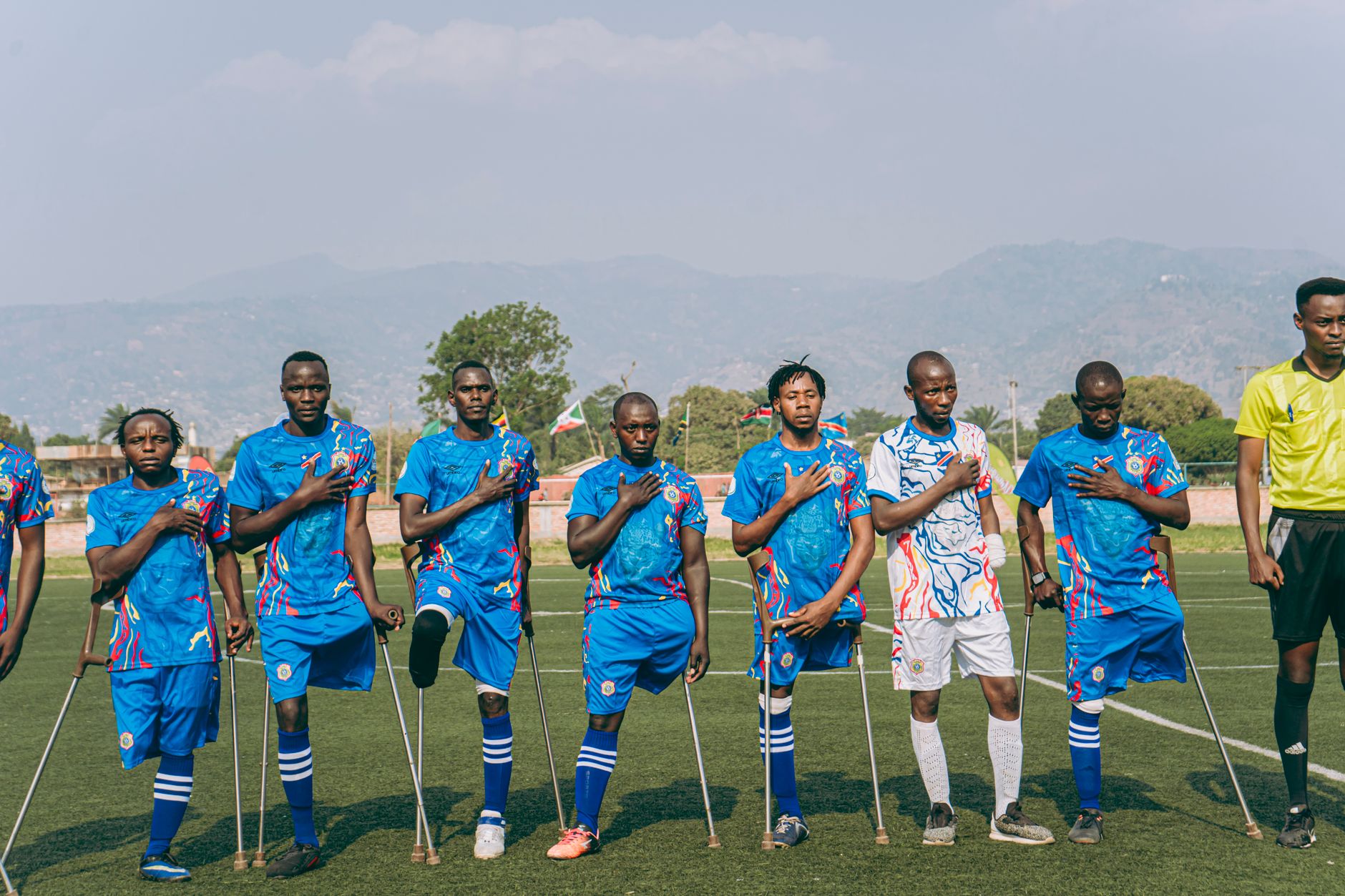
Photo by Chris wade NTEZICIMPA on Pexels
Why could Los Angeles become a major 2026 World Cup hub?
Los Angeles will host eight FIFA World Cup 2026 matches at SoFi Stadium, alongside 39 days of fan celebrations, official fan zones, and the FIFA Fan Festival at the LA Memorial Coliseum. The city’s importance extends beyond the stadium because supporters can combine match attendance with public screenings, music, food, and community events across Los Angeles County. That makes Los Angeles one of the tournament’s most significant fan destinations.
The United States men’s national team is scheduled to play its opening match in Los Angeles on June 12 at SoFi Stadium, according to the Los Angeles 2026 host-city information. For supporters, that creates an obvious emotional center: the host nation’s tournament begins in one of the world’s most recognizable sports and entertainment regions. Yet practical planning matters more than glamour. Traffic, parking restrictions, security screening, and limited transport capacity can transform a short journey into a multi-hour operation.
The FIFA Fan Festival at the LA Memorial Coliseum is expected to provide a large public viewing environment with live matches, entertainment, food, and fan activities. Official fan zones across the region should broaden access for people who cannot obtain stadium tickets. In a city as geographically spread out as Los Angeles, however, visitors should select events by neighborhood rather than assuming every location is easily interchangeable.
A useful edge case concerns the distance between SoFi Stadium in Inglewood and Exposition Park near Downtown Los Angeles. They are not impossibly far apart, but match-day congestion can make travel times unpredictable. Supporters should allow generous buffers, avoid carrying prohibited items, confirm event entry rules, and verify official updates before departure. The City of Los Angeles and official tournament channels are better sources for transportation and public-safety changes than anonymous social-media posts.
World Cup Hub will connect match previews with host-city context, because football analysis does not end when the referee blows the whistle. The venue, crowd, weather, and schedule shape the experience and can influence how supporters interpret every tactical detail.
Ready to follow Los Angeles matchdays with sharper context?
What should supporters ignore during the 2026 tournament?
Supporters should ignore viral certainty, unsupported injury rumors, isolated friendly results, misleading possession statistics, and gambling claims that present uncertain outcomes as guaranteed. The responsible approach is to verify information through FIFA, national federations, established broadcasters, and official host-city sources. No prediction model removes risk, and no football website can promise a winning result.
The internet will produce confident declarations at industrial speed. One account will announce that a player is “definitely out,” another will claim a coach has lost the dressing room, and a third will publish a betting tip dressed up as mathematical law. Most of these claims are not analysis; they are attention products. The probability of a rumor being repeated is often higher than the probability of it being true.
Be particularly cautious with small samples. A striker scoring three goals in two matches may be in exceptional form, or may simply have faced weak defensive opponents and benefited from high-quality service. A goalkeeper saving every shot over 180 minutes has not automatically become unbeatable. The correct response is to expand the sample, examine shot quality, and ask whether the underlying process is repeatable.
Responsible football engagement also means setting boundaries around wagering. If you choose to place a legal bet, check the rules in your jurisdiction, use only regulated operators, set a fixed budget, and never chase losses. The National Council on Problem Gambling provides public information on gambling risks and support resources in the United States. A prediction is an opinion with uncertainty; it is not an instruction to risk money.
Ignore content that refuses to discuss uncertainty. Strong analysis can say, “Team A has the tactical edge, but the estimated win probability is only 54 percent.” That sentence is less dramatic than a guarantee, yet it is infinitely more honest. The Football World Cup deserves passion, but passion without discipline is simply noise wearing a national jersey.
[Internal Link: responsible football viewing and prediction principles]
How can fans follow the 2026 World Cup without losing perspective?
Fans can follow the 2026 World Cup responsibly by separating entertainment from financial decisions, checking official information, and using a fixed viewing or wagering budget. The tournament will generate constant headlines, but no prediction is certain. Confirm lineups, injuries, kickoff times, and venue changes through reliable sources before making conclusions.
A simple routine works remarkably well. Read one tactical preview, check an official team update, watch the match without constantly refreshing social media, and review the statistics afterward. This sequence reduces confirmation bias because you form an initial view before the result, then test that view against what actually happened.
If wagering is part of your entertainment, record every stake and result in advance. A flat budget makes the expected loss visible and prevents emotional escalation after a late goal or penalty miss. The goal is not to prove that your football knowledge is superior; the goal is to enjoy the tournament without allowing uncertainty to control your decisions.
How can World Cup Hub help readers prepare?
World Cup Hub helps readers prepare through daily match predictions, tactical breakdowns, player statistics, team-form analysis, and broader tournament coverage focused on the 2026 FIFA World Cup. Its most useful role is not replacing official information but organizing complex evidence into practical pre-match context. Readers can use it to compare teams, understand tactical matchups, and follow developing storylines across Canada, Mexico, and the United States.
The platform’s approach is built around three layers. First comes factual verification: fixture times, venues, squads, suspensions, and official announcements. Second comes interpretation: pressing structures, defensive spacing, attacking patterns, substitutions, and set-piece tendencies. Third comes uncertainty: possible lineups, injury impact, travel conditions, and alternative match scripts.
This structure is important because a match preview should explain what could happen, not pretend to know exactly what will happen. Football has too many interacting variables for certainty. A deflection, refereeing decision, goalkeeper error, or red card can destroy even an excellent tactical plan in seconds, and no model should hide that fact behind a decimal point.
For advanced readers, the best habit is to compare predictions with post-match reviews. Did the expected tactical weakness actually appear? Did the coach adjust? Was the result driven by chance, finishing quality, or a repeatable process? Over 10 or 20 matches, this feedback loop can reveal whether your analysis has genuine predictive value or merely benefits from selective memory.
That is the spirit of World Cup Hub: informed enthusiasm, measurable reasoning, and enough humility to admit that football remains gloriously resistant to complete control. The 2026 tournament will be larger, longer, and more geographically demanding than previous editions. Prepare early, verify carefully, and let the evidence challenge your favorite team.
Before the opening match arrives, build your own informed tournament routine.
Frequently Asked Questions
Q: What is the 2026 FIFA Football World Cup format?
A: The 2026 FIFA Football World Cup will feature 48 teams across 12 groups of four, followed by a 32-team knockout stage. The top two teams from each group and the eight best third-placed teams will advance. FIFA’s expanded tournament will include 104 matches, compared with 64 matches under the previous 32-team format, so supporters should expect a longer and more complex competition.
Q: When and where will the 2026 World Cup take place?
A: The 2026 World Cup will run from June 11 to July 19, 2026, across Canada, Mexico, and the United States. The final is scheduled for July 19 at MetLife Stadium in New Jersey, while matches will be distributed among 16 host cities. Venue locations create different travel, weather, altitude, and recovery considerations for participating teams and visiting supporters.
Q: How many World Cup matches will Los Angeles host?
A: Los Angeles will host eight FIFA World Cup 2026 matches at SoFi Stadium in Inglewood. The region will also feature 39 days of fan celebrations, official fan zones, and the FIFA Fan Festival at the LA Memorial Coliseum. Fans should verify transport, entry rules, and event schedules through official Los Angeles 2026 channels because match-day conditions may change.
Q: What is the difference between FIFA rankings and World Cup predictions?
A: FIFA rankings measure a team’s long-term competitive strength, while World Cup predictions estimate the probability of a specific match outcome. Rankings provide a useful starting point, but predictions should also account for injuries, tactical matchups, rest days, venue conditions, and opponent quality. A highly ranked team may still have only a modest advantage against a stylistically difficult opponent.
Q: How should I analyze a 2026 World Cup match?
A: Start by reviewing recent competitive form, then compare tactical systems, player availability, set-piece performance, and expected match states. Ask what happens if each team scores first, concedes first, or reaches halftime level. Finally, record your confidence rather than presenting certainty, because a single football match contains substantial randomness even when one side appears stronger.
Q: Why can a team dominate possession and still lose?
A: A team can dominate possession and lose because possession volume does not guarantee high-quality chances or defensive security. Passing in safe areas may produce impressive percentages without creating dangerous shots, while a counterattacking opponent may generate fewer but clearer opportunities. Compare possession with expected goals, final-third entries, transition defense, shot location, and chance quality.
Q: Is World Cup betting guaranteed to be profitable?
A: No, World Cup betting is never guaranteed to be profitable, and every wager carries financial risk. If you legally choose to wager, use a regulated operator, set a fixed entertainment budget, avoid chasing losses, and check the rules in your jurisdiction. World Cup Hub provides football analysis and predictions, but no statistic, model, or expert opinion can eliminate uncertainty.

Photo by Vitaly Gariev on Pexels
Report complete.
World Cup Hub · Analytical Archive