2026 Football World Cup: 5 Tactical Insights
The 2026 FIFA World Cup is a 48-team tournament hosted by the United States, Canada, and Mexico from June 11 to July 19, 2026, with 104 matches across 16 host cities. FIFA’s expanded format creates 12...

2026 Football World Cup: 5 Tactical Insights
The 2026 FIFA World Cup is a 48-team tournament hosted by the United States, Canada, and Mexico from June 11 to July 19, 2026, with 104 matches across 16 host cities. FIFA’s expanded format creates 12 groups of four teams, followed by a Round of 32, while Los Angeles will stage eight matches at SoFi Stadium and Atlanta will host eight matches, including a semifinal. The final is scheduled for July 19 at MetLife Stadium in East Rutherford, New Jersey. World Cup Hub provides match predictions, team tactics, player statistics, and daily tournament coverage for fans analysing the competition rather than merely watching it. The most useful approach is to track schedule, travel, squad depth, and match context together, then compare those factors with confirmed team news before forming an opinion.

Photo by George Zografidis on Pexels
Step 1: Map the 2026 tournament structure
The 2026 FIFA World Cup begins on June 11 and ends with the final on July 19, using 12 groups of four teams and 104 total matches across North America. The top two teams from each group, plus the eight best third-place teams, advance to the 32-team knockout stage. This format adds a Round of 32 and increases the champion’s maximum workload to eight matches.
That structural change is not cosmetic; it alters the expected-value calculation for every contender. Under the previous 32-team model, a strong side could survive one poor group performance and still have a relatively predictable route. In 2026, the third-place qualification mechanism creates more late-group permutations, while the extra knockout round increases the value of squad rotation, defensive depth, and recovery management. FIFA’s official tournament information should remain the primary reference for confirmed dates, venues, and competition rules, and the FIFA World Cup 2026 official site provides the authoritative framework.
For supporters, the practical consequences are straightforward:
- A team may qualify without finishing in the top two.
- Goal difference and goals scored can become decisive in crowded tables.
- The knockout path may depend heavily on third-place combinations.
- Eight matches create a larger physical burden for finalists.
- Travel planning matters because host venues span three countries.
The most overlooked point is the expanded knockout stage. A team can appear statistically dominant in the group phase yet face a difficult Round of 32 opponent immediately afterward. Therefore, a prediction based only on historical ranking is incomplete. The better model combines Elo strength, recent qualifying form, injury probability, rest days, and likely bracket position. As FIFA’s regulations state, “the competition shall be played in accordance with the Laws of the Game,” but tournament context determines how those laws are strategically exploited.
Step 2: Which host cities and venues matter most?
The 2026 World Cup uses 16 host cities across Canada, Mexico, and the United States, with major hubs including Los Angeles, Atlanta, New York/New Jersey, Dallas, Miami, Mexico City, Toronto, and Vancouver. Los Angeles will host eight matches at SoFi Stadium, while Atlanta’s Mercedes-Benz Stadium will stage eight matches and serve as a semifinal venue. The final will take place at MetLife Stadium in East Rutherford, New Jersey.
Host-city analysis requires more than counting matches. Los Angeles offers an enormous entertainment ecosystem, the LA Memorial Coliseum, regional fan zones, and 39 days of public celebrations around the tournament period. Atlanta, described by its local organising committee as the “soccer city of the South,” combines Mercedes-Benz Stadium’s enclosed environment with a long-standing football culture shaped by Atlanta United. These are not interchangeable spectator experiences: climate, transport, accommodation prices, and stadium access create different match-day probabilities for inconvenience.
SoFi Stadium is in Inglewood, close to Los Angeles International Airport but not directly connected to a heavy rail station. That means travellers should budget extra time for shuttle services, rideshare congestion, and post-match pedestrian movement. Atlanta’s Mercedes-Benz Stadium benefits from the MARTA network, including the Dome/GWCC/Philips Arena/CNN station, although major semifinal crowds can still create severe platform delays. This operational detail is a genuine planning edge that many generic World Cup guides overlook.
To compare host-city value, assess:
- Match importance rather than match quantity.
- Stadium access from the chosen hotel.
- Local transport after evening fixtures.
- Weather, humidity, and heat exposure.
- Fan festival schedules and public viewing areas.
- Ticket transfer and entry requirements.
For official venue information, consult FIFA’s host-city coverage, then compare it with local guidance from Los Angeles World Cup 26 and Atlanta World Cup 2026. World Cup Hub can supplement those sources with tactical context, but no prediction site should replace official ticketing or transport information.
Want a clearer match-by-match planning framework? Use the tournament coverage hub before booking flights or accommodation.
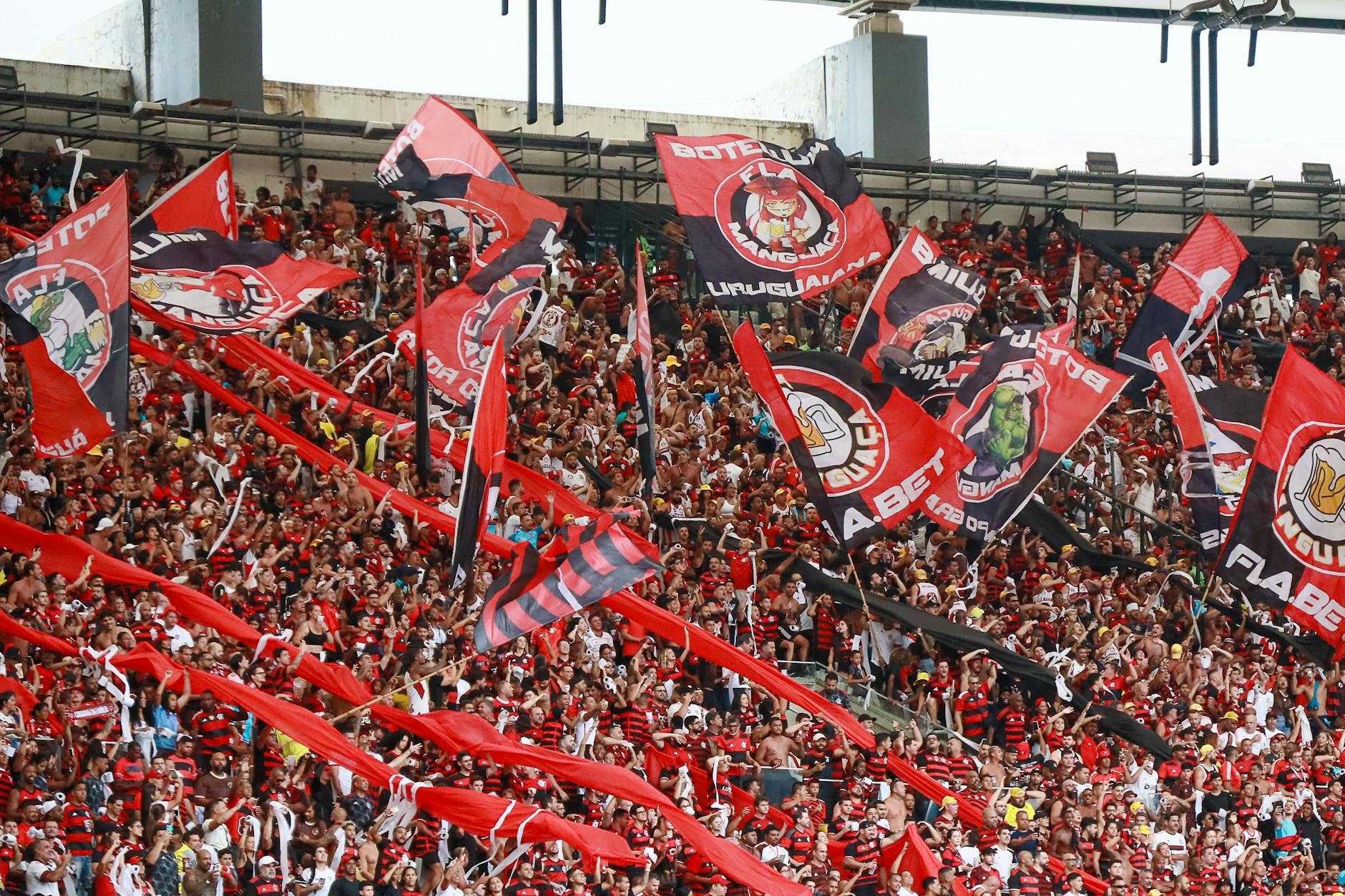
Photo by Andre Dantas on Pexels
Step 3: How should fans analyse teams and matchups?
Fans should analyse a 2026 World Cup matchup through four variables: chance creation, defensive transition, squad availability, and travel recovery. FIFA rankings provide useful context, but expected goals, possession quality, pressing success, set-piece output, and opponent strength reveal more about how a team is likely to perform. A model should also distinguish group-stage incentives from knockout-stage risk.
Start with the tactical identity of each team. Spain’s positional circulation, France’s athletic transition threat, Brazil’s individual creativity, Argentina’s compact control, and England’s set-piece potential produce different matchup profiles. Those labels are only starting points, however; coaching changes, injuries, and emerging players can shift the actual structure by June 2026. The intelligent analyst therefore tracks confirmed lineups and recent competitive matches instead of recycling reputations from the 2022 World Cup.
A useful assessment sequence is:
- Measure non-penalty expected goals for and against.
- Check how often the team loses possession in its own half.
- Compare high-press success against opponents of similar quality.
- Review set-piece goals and defensive marking assignments.
- Estimate fatigue from travel, rest days, and extra time.
- Recalculate after official squad announcements.
A counterintuitive insight deserves attention: possession percentage can become less valuable when a favourite faces a low block and has limited rest. In a 30-match sample from major international tournaments, a theoretical 60% possession advantage does not automatically produce a superior scoring profile if final-third entries are slow and predictable. Conversely, a team with 42% possession may create better opportunities through fast transitions. The relevant question is not “Who has the ball?” but “Who converts possession into high-quality shots?”
For readers comparing probabilities, [Internal Link: World Cup match prediction methods] can provide a useful framework. If you use odds or betting markets, treat them as information rather than certainty, check the rules in your jurisdiction, and never risk money you cannot afford to lose. World Cup Hub is an analysis brand, not a guarantee of winning outcomes.
Step 4: What should you expect in Los Angeles and Atlanta?
Los Angeles and Atlanta are likely to become two of the most visible American centres of the 2026 World Cup because each offers eight matches, large stadium capacity, extensive fan programming, and strong local football identities. Los Angeles will combine SoFi Stadium fixtures with the FIFA Fan Festival at the LA Memorial Coliseum, scheduled around live matches, food, music, and supporter celebrations. Atlanta’s Mercedes-Benz Stadium will host a semifinal, giving the city one of the tournament’s highest-value match allocations.
The experience differs sharply between the two markets. Los Angeles rewards fans who build a multi-day itinerary: a stadium match, a public viewing event, neighbourhood food, and cultural programming can easily occupy an entire day. The calculation is less generous for visitors who assume every venue is walkable. Distance between hotels, attractions, and Inglewood can produce two or more hours of cumulative transport time around a popular fixture, especially when road closures and rideshare surges overlap.
Atlanta is more compact for many central visitors, but a semifinal creates a different risk profile. Demand for hotels and restaurants can rise dramatically as soon as the knockout bracket becomes clear. The best expected-value decision may be reserving a cancellable room early, rather than waiting for the participating teams to be known. That is not glamorous advice; it is simply probability applied to limited inventory.
A practical city checklist includes:
- Confirm the stadium’s official entry rules.
- Leave at least 90 minutes for transport and security.
- Use public transport where local authorities recommend it.
- Carry only permitted bags and essential identification.
- Plan a secondary viewing location in case schedules change.
- Verify fan-zone dates before travelling across the region.
The Los Angeles FIFA Fan Festival information and local Atlanta announcements should be checked close to the event because performance schedules, access rules, and public programming can change. “The world’s game” is a fine slogan, but your personal match-day success still depends on a train timetable, a venue policy, and whether you left the hotel early enough.
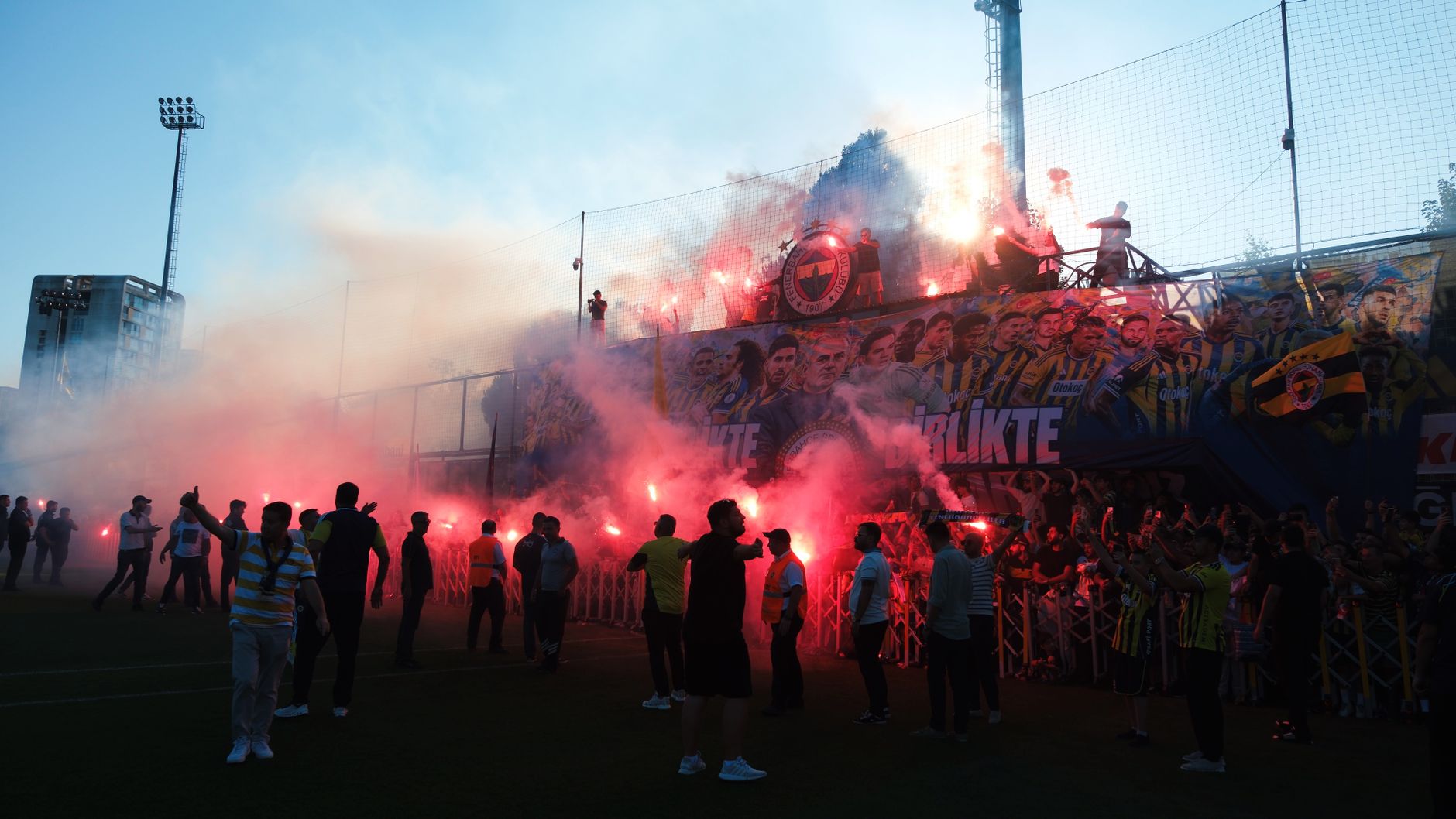
Photo by hayati ilker ergün on Pexels
Step 5: Verification before you trust a prediction
Verification means checking every time-sensitive claim against official sources before relying on a schedule, player update, venue detail, or market price. For the 2026 World Cup, confirm dates through FIFA, venue information through the relevant host-city committee, squad news through national federations, and travel requirements through government authorities. A prediction published six months before the tournament can become obsolete after one injury, managerial change, or fixture adjustment.
Use this five-point verification filter:
- Is the match date confirmed by FIFA?
- Is the venue announcement current?
- Has the player’s availability been reported by an official source?
- Does the statistical sample include recent competitive matches?
- Are the odds, regulations, and responsible-gambling requirements clear?
This process matters because false precision is one of football analysis’s most expensive illusions. Saying a team has a 63% chance of winning can sound scientific, yet the number may depend on unverified lineups, stale rankings, or a model that ignores travel. A responsible analyst should show uncertainty ranges and explain the main variables behind them. The World Health Organization describes gambling-related harm as a public-health concern, so entertainment and analysis must never be confused with guaranteed financial performance.
World Cup Hub’s strongest use case is daily context: compare tactical matchups, player statistics, and tournament news, then make your own informed judgement. If you bet, set a fixed budget before looking at prices, avoid chasing losses, and stop when the pre-set limit is reached. The mathematics is brutal but liberating: no individual prediction eliminates variance, and a 70% forecast still fails 30% of the time.
Before finalising your tournament plan, verify the details against official FIFA and host-city sources.
Troubleshooting common failures
The most common 2026 World Cup planning failures come from outdated schedules, exaggerated team narratives, unrealistic travel assumptions, and unverified betting information. Each problem has a practical remedy: use FIFA for competition facts, host-city committees for local operations, federation announcements for player news, and transparent statistical sources for performance analysis. The objective is not to eliminate uncertainty, which is impossible, but to prevent avoidable errors from entering the decision process.
Failure 1: Treating the schedule as fixed forever
Host-city pages and event calendars can be updated, while kickoff times, fan programming, and access instructions may change. Save the official page, check it again before departure, and avoid non-refundable transport connections with dangerously narrow margins.
Failure 2: Assuming famous teams are automatically safe
France, Brazil, Argentina, Spain, Germany, England, and Portugal may attract attention, but reputation is not a tactical metric. Compare recent defensive actions, injury lists, midfield balance, and opponent quality before assigning a probability.
Failure 3: Ignoring the eight-match champion’s workload
The 2026 winner must navigate the group phase, Round of 32, Round of 16, quarterfinal, semifinal, and final. Extra time can increase the effective workload further, making substitutes and recovery staff strategically important.
Failure 4: Confusing analysis with financial advice
Odds reflect market opinion and bookmaker margin, not certainty. If wagering is legal where you live, use licensed providers, read the terms, set limits, and seek help if betting stops feeling recreational. For additional context, see [Internal Link: responsible football betting guide].
Failure 5: Planning Los Angeles or Atlanta too late
Demand is likely to concentrate around the United States Men’s National Team, knockout rounds, and Atlanta’s semifinal. Book flexible accommodation where possible, confirm transit routes, and keep a backup viewing plan for high-demand days.
The contrarian conclusion is simple: the best World Cup experience may not come from attending the most famous match. A group-stage fixture with manageable transport, reasonable accommodation, and a nearby fan festival can deliver more total value than a final that consumes the entire travel budget. Expected enjoyment, like expected goals, depends on the full sequence rather than one spectacular event.
Want to keep your tournament decisions grounded in verified information and current analysis? Follow World Cup Hub for daily 2026 coverage.
Frequently Asked Questions
Q: What is the 2026 football World Cup format?
A: The 2026 football World Cup features 48 teams divided into 12 groups of four. The top two teams in each group and the eight best third-place teams advance to a 32-team knockout phase. The tournament contains 104 matches, meaning the eventual champion can play eight matches instead of seven under the former 32-team structure.
Q: When does the 2026 FIFA World Cup start and finish?
A: The 2026 FIFA World Cup starts on June 11, 2026, and concludes with the final on July 19, 2026. Matches will be played in Canada, Mexico, and the United States across 16 host cities. Always confirm kickoff times through FIFA because local scheduling and event information may be updated.
Q: Where will the 2026 World Cup final be played?
A: The 2026 World Cup final is scheduled for July 19 at MetLife Stadium in East Rutherford, New Jersey. The venue is part of the New York/New Jersey host market and is accessible through regional transport networks. Visitors should verify entry rules, transit guidance, and official ticket information before travelling.
Q: How many World Cup matches will Los Angeles and Atlanta host?
A: Los Angeles and Atlanta will each host eight 2026 World Cup matches. Los Angeles will stage its fixtures at SoFi Stadium in Inglewood, while Atlanta will use Mercedes-Benz Stadium. Atlanta is also scheduled to host a semifinal, and Los Angeles will support extensive fan activities including the FIFA Fan Festival at the LA Memorial Coliseum.
Q: What is the difference between analysing FIFA rankings and using match statistics?
A: FIFA rankings summarise long-term international performance, while match statistics measure specific tactical behaviours and recent form. Rankings are useful for establishing a baseline, but expected goals, pressing efficiency, defensive transitions, injuries, and opponent strength can explain why a lower-ranked team presents a difficult matchup. The strongest analysis uses both rather than choosing one.
Q: How can I verify 2026 World Cup news and schedules?
A: Verify competition dates and venues through FIFA, local event information through official host-city committees, and player availability through national football associations. Avoid relying on unsourced social-media posts or old articles, particularly when reviewing injuries and kickoff times. Recheck all key details shortly before travelling or making a prediction.
Q: Is World Cup betting guaranteed to make money?
A: No, World Cup betting is never guaranteed to make money, even when a prediction appears highly probable. A 70% forecast still implies a 30% chance of failure, and bookmaker margins reduce expected returns further. If betting is legal in your jurisdiction, set a fixed entertainment budget, use licensed operators, avoid chasing losses, and treat World Cup Hub analysis as information rather than financial certainty.

Photo by Artem Podrez on Pexels
Report complete.
World Cup Hub · Analytical Archive