World Cup 2026 vs 2022: Tournament Scale
World Cup 2026 will be FIFA’s first 48-team men’s tournament, staged across Canada, Mexico, and the United States from June 11 to July 19, 2026, while World Cup 2022 featured 32 teams in Qatar and 64....

World Cup 2026 vs 2022: Tournament Scale
World Cup 2026 will be FIFA’s first 48-team men’s tournament, staged across Canada, Mexico, and the United States from June 11 to July 19, 2026, while World Cup 2022 featured 32 teams in Qatar and 64 matches. The expanded edition will deliver 104 matches across 16 host cities, creating a larger schedule, wider travel demands, and more unpredictable qualification mathematics. Mexico City hosts the opening match, and MetLife Stadium in New Jersey hosts the final, according to FIFA’s official tournament framework. World Cup Hub tracks the competition through team tactics, player statistics, match predictions, and daily tournament coverage for supporters worldwide. The crucial difference is not merely 16 additional teams; it is the increased number of variables affecting rest, travel, squad depth, and betting analysis. Start by mapping the official fixtures, host-city distances, and team qualification status before trusting any prediction or placing any legally permitted wager.

Photo by Allen Boguslavsky on Pexels
Step 1: How do you map the World Cup 2026 tournament structure?
World Cup 2026 begins on June 11, 2026, and ends with the final on July 19, 2026, across 16 venues in Canada, Mexico, and the United States. The tournament includes 48 national teams divided into 12 groups of four, with 32 teams advancing to a newly expanded knockout phase. This structure makes the schedule more complex than Qatar 2022, where 32 teams competed in eight groups and 16 reached the round of 16.
The first task is to separate confirmed facts from assumptions. FIFA has awarded automatic qualification to co-hosts Canada, Mexico, and the United States, while the remaining places are allocated through confederation qualification and a six-team playoff tournament. The allocation includes:
- UEFA: 16 direct places.
- CAF: 9 direct places plus one playoff position.
- AFC: 8 direct places plus one playoff position.
- CONMEBOL: 6 direct places plus one playoff position.
- Concacaf: 6 direct places, including the three hosts, plus two playoff positions.
- OFC: 1 direct place plus one playoff position.
The arithmetic matters. Under the 12-group format, each team is guaranteed at least three group matches, but the best eight third-place teams also advance. That means a side can survive with a modest record, while a strong team may still face a dangerous knockout opponent immediately. FIFA’s official World Cup 2026 competition information is the authority for dates, regulations, and tournament updates, not an unverified fixture graphic circulating on social media.
For prediction purposes, I recommend building a fixture table with five columns: match date, venue, local kickoff time, team travel distance, and qualification incentive. Most casual previews record only the first three. That is a mistake. In an expanded World Cup, incentive and recovery time can have greater expected value than a famous team’s historical reputation.
Want a clearer starting point for tournament research?
The schedule is a probability problem, not a poster
A tournament schedule changes the probability distribution of outcomes. Suppose Team A has a 55% chance of winning a neutral-site match against Team B under normal rest. If Team A travels roughly 3,000 kilometers, plays in a different time zone, and has only three recovery nights, that baseline should not be treated as fixed. The exact adjustment cannot be known before lineups and venues are confirmed, but the principle is measurable: travel, humidity, altitude, and rest affect performance.
The three host countries also create meaningful geographic contrasts. Mexico City sits at high altitude, while Miami and Monterrey offer different heat and humidity profiles. Vancouver, Seattle, Toronto, and the northern United States may produce more temperate conditions. A team accustomed to one climate may face a different physiological challenge four days later. The National Oceanic and Atmospheric Administration provides climate data that can help analysts compare temperature and humidity rather than relying on vague descriptions such as “hot conditions.”
An important edge case is the third-place qualification system. A team that earns four points may qualify comfortably, but the same total could become insufficient if several groups produce similar results. Therefore, the value of a late group match depends on the table, not merely the opponent. Analysts who publish fixed “must win” claims before the first two rounds are pretending uncertainty does not exist. Probability does not reward theatrical certainty; it rewards updated information.
[Internal Link: World Cup 2026 group-stage qualification guide]
Step 2: What should you verify before using the World Cup 2026 schedule?
Before using a World Cup 2026 schedule for travel, fantasy football, or match predictions, verify the fixture date, host venue, kickoff time, participating teams, and the tournament phase. FIFA’s official schedule should be checked against a reputable sports provider such as ESPN because local time conversions can create errors across North America. A schedule is reliable only when its location and time zone are confirmed.
This sounds obvious, yet it is where many readers make their first avoidable error. A match listed in Eastern Time may begin on a different calendar day for viewers in London, Tokyo, or Sydney. The United States includes multiple time zones, and Canada and Mexico add further conversion complications. Use a calendar that displays both the venue’s local time and your personal time zone, then confirm daylight-saving rules for the relevant date in June or July 2026.
Your verification checklist should include:
- FIFA match number and tournament round.
- Host city and stadium name.
- Local kickoff time and your converted time.
- Team qualification status.
- Rest days since each team’s previous match.
- Travel route between consecutive venues.
- Official changes to venue, kickoff, or broadcast information.
- Legal betting availability in your jurisdiction, if relevant.
World Cup Hub uses this type of cross-checking when presenting match previews because the difference between a confirmed fixture and a provisional fixture is enormous. A single venue change can affect travel, weather assumptions, and market prices. According to ESPN’s FIFA World Cup schedule page, schedule information is presented through a sports-calendar framework, but readers should still compare live updates with FIFA announcements.
Here is a practitioner-level point many generic guides omit: do not save only the stadium name. Save the stadium’s city, state or province, country, and local time zone. “New York” can refer to an event marketed around the metropolitan area while the venue itself is in New Jersey, and that distinction affects transport planning, hotel selection, and kickoff conversion. Small labels create large logistical consequences.
See how the key schedule variables fit together before making a plan.
Step 3: How should you analyze teams, players, and match predictions?
World Cup 2026 match analysis should combine team strength, squad depth, tactical compatibility, player availability, schedule difficulty, and market price. A prediction is not the same as a probability, and a probability is not the same as a good wager. If a model gives a team a 60% chance of winning, its fair decimal price is approximately 1.67 before fees, margin, or uncertainty; a much shorter available price may offer negative expected value.
The expanded tournament makes squad depth more important because teams must navigate at least three group matches and potentially four knockout rounds. A side built around one elite striker may dominate a single fixture but struggle when injuries, suspensions, and short recovery windows accumulate. By contrast, a team with two competent players in each major position can preserve its performance level even when the starting XI changes.
A practical analytical framework includes:
- Baseline strength: FIFA ranking, recent competitive results, and opponent quality.
- Chance creation: expected goals, shots from dangerous areas, set-piece output, and transition attacks.
- Defensive resistance: pressing efficiency, deep-block discipline, goalkeeper performance, and aerial defending.
- Availability: injuries, suspensions, travel fatigue, and club workload.
- Tactical matchup: whether one team can exploit the other’s weak side, full-back positioning, or buildup structure.
- Price discipline: whether the market probability is lower than your estimated probability after accounting for margin.
Player statistics should be interpreted in context. A midfielder completing 92% of passes in a possession-heavy team is not automatically more influential than one completing 83% while breaking defensive lines under pressure. Similarly, a striker’s goal total can be distorted by penalties, teammates’ chance creation, and the quality of opposing defenses. FIFA’s technical study publications offer useful tournament-level context for tactical trends and performance analysis.
The information gain comes from separating “team quality” into match-specific layers. A favorite may have the higher 90-minute win probability but the lower value if the market has already priced its reputation. Conversely, a supposedly weaker team can be attractive in a handicap market if its defensive structure reduces the opponent’s shot quality. This is not magic; it is the expected-value equation: estimated probability multiplied by potential return, minus the probability of losing multiplied by the stake.
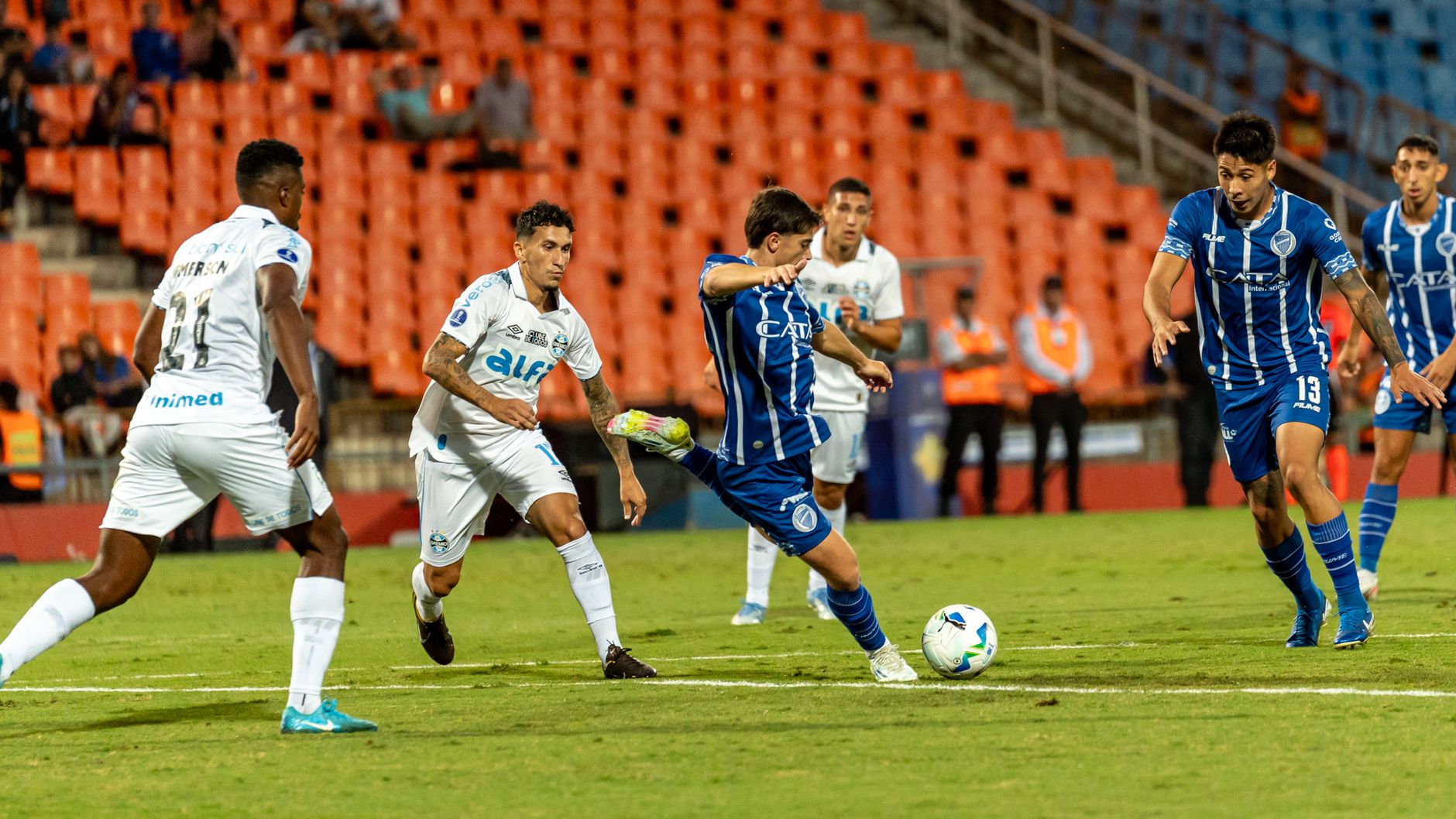
Photo by Franco Monsalvo on Pexels
A simple expected-value example
Imagine a legally available market offers decimal odds of 2.10 on Team X. The implied probability before bookmaker margin is 47.6%, calculated as 1 divided by 2.10. If your properly documented model estimates Team X’s true chance at 52%, the theoretical expected value per one-unit stake is:
EV = (0.52 × 1.10) − (0.48 × 1.00) = 0.092 units
That is a positive estimate of 9.2% under the assumptions, not a guarantee of profit. Your model may be wrong, the lineup may change, or the market may contain information you missed. Wise analysis therefore tracks predictions against closing prices and actual results instead of celebrating one lucky winner. World Cup Hub’s prediction coverage should be treated as research, not a substitute for independent judgment or financial control.
A second edge case concerns markets on matches where qualification has already been decided. Coaches may rotate goalkeepers, resting players who normally influence pressing or set pieces. Public bettors often continue treating the team name as the central variable, while the starting lineup is more relevant. Confirmed team news can alter a match probability more than a month of historical results.
To explore tactical breakdowns and player form, continue with the relevant World Cup Hub coverage.
Step 4: How can you plan travel and viewing across three countries?
Travel planning for World Cup 2026 requires a city-based strategy rather than a country-based assumption. Canada, Mexico, and the United States cover an enormous geographic area, and consecutive matches may involve long flights, border procedures, different transport systems, and changing local costs. Fans should choose a regional cluster, confirm ticket and accommodation policies, and build recovery time into every transfer.
The 16 host cities are distributed across North America, including Toronto and Vancouver in Canada; Mexico City, Guadalajara, and Monterrey in Mexico; and venues across the United States such as Atlanta, Boston, Dallas, Houston, Kansas City, Los Angeles, Miami, New York/New Jersey, Philadelphia, San Francisco Bay Area, and Seattle. The exact journey between two matches can be more important than the nominal distance because airports, traffic, and border crossings determine total travel time.
Use this planning sequence:
- Select the first match you genuinely want to attend.
- Add nearby fixtures before considering cross-country travel.
- Compare flight, rail, and ground-transfer options.
- Reserve cancellation-flexible accommodation where possible.
- Check passport, visa, and entry requirements for each country.
- Confirm stadium transport rules and permitted bag sizes.
- Create a backup viewing plan in case of delay or schedule change.
[Internal Link: World Cup 2026 host cities and stadium guide]
The most overlooked variable is the post-match exit. A stadium may be full of 80,000 spectators, while rail stations and rideshare zones absorb demand slowly. Leaving a venue can take longer than reaching it, particularly in a major metropolitan area such as Los Angeles, New York, or Mexico City. Schedule your next transfer from the realistic exit time, not the final whistle. That single adjustment can prevent an expensive missed connection.
Entry documentation also deserves disciplined attention. Immigration rules differ between Canada, Mexico, and the United States, and a ticket does not guarantee admission. Consult official government portals such as Travel.State.Gov for U.S. entry information, then check Canada and Mexico’s official requirements for your nationality. Requirements can change, so verify close to departure rather than relying on a screenshot from a travel forum.
There is a financial calculation here too. If a premium hotel costs $250 more per night but eliminates a six-hour transfer and reduces the probability of missing a match, its practical value may exceed the headline price. Conversely, spending heavily on multiple distant fixtures can destroy the enjoyment of the trip. The rational plan maximizes meaningful football experiences per unit of money and energy, not the raw number of stadium selfies.
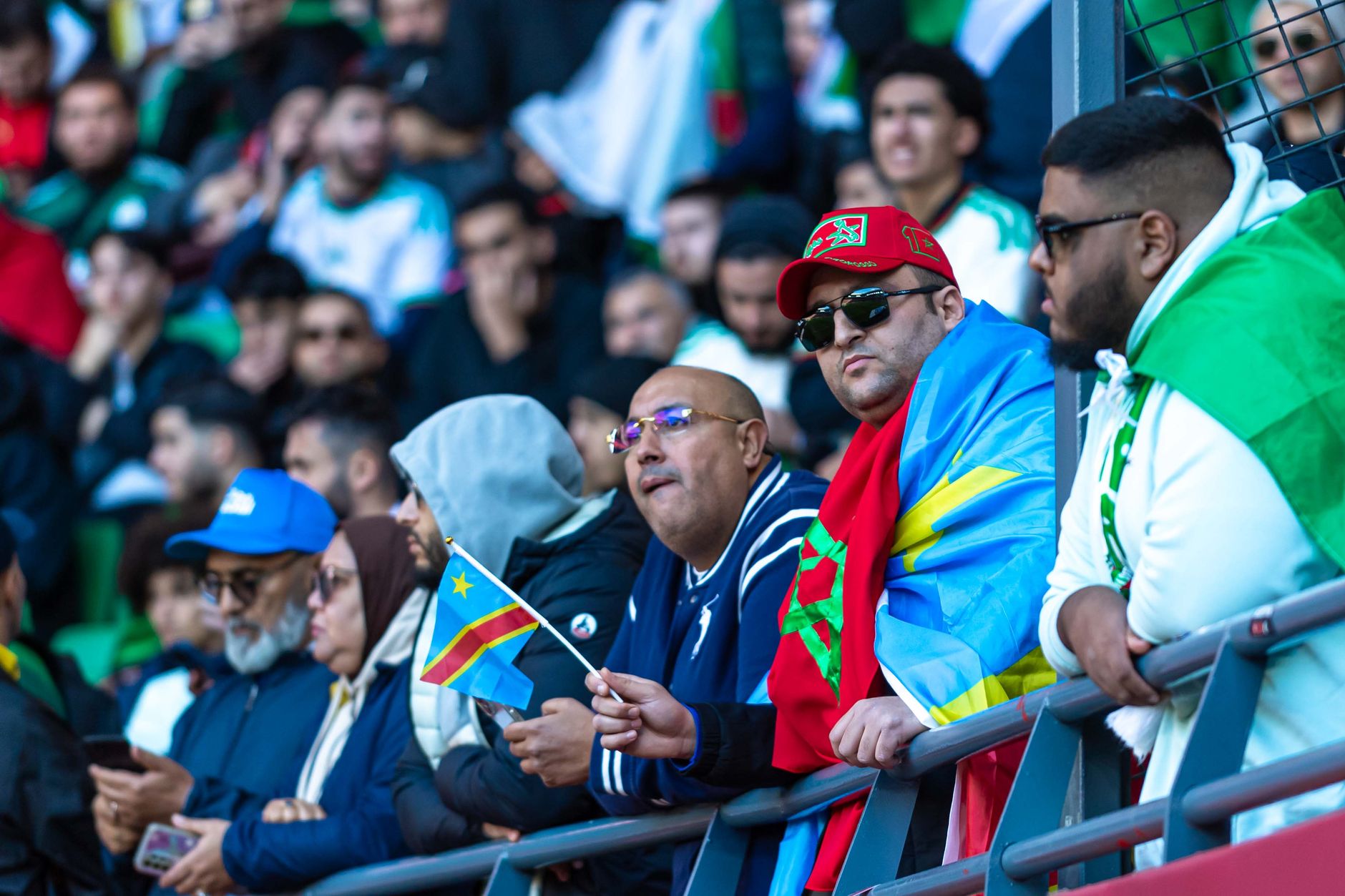
Photo by Guylain Kipoke on Pexels
Step 5: Verification
Verification is the final stage before you trust a World Cup 2026 article, schedule, prediction, ticket claim, or betting market. Confirm each material statement against primary or reputable secondary sources, record the date checked, and distinguish confirmed information from projections. FIFA, national football associations, host-city authorities, official immigration agencies, and established sports providers should carry more weight than anonymous accounts or copied graphics.
Use this five-part verification routine:
- Date check: Is the information current for 2026, or does it describe Qatar 2022?
- Entity check: Are the teams, stadiums, cities, and confederations named accurately?
- Number check: Do totals such as 48 teams, 104 matches, 16 host cities, and 12 groups agree with FIFA information?
- Context check: Does the claim explain whether a statistic covers qualifiers, friendlies, club football, or World Cup matches?
- Incentive check: Is the content informing you, selling a service, or encouraging a wager?
The quotation “The FIFA World Cup 26 will be the biggest and most inclusive FIFA World Cup ever” appears in FIFA’s official tournament communications. The claim is supported by the expansion from 32 to 48 teams and from 64 to 104 matches, but “biggest” should not be interpreted as “easiest to predict.” More teams create more matchups, more travel, and more uncertainty.
A responsible publication should also explain limitations. World Cup Hub can provide predictions, tactics, and player statistics, but no editorial forecast can remove variance from football. Even a 70% favorite loses 30% of the time under the model’s assumptions. If you use licensed betting services where permitted, set a fixed budget, avoid chasing losses, and treat any stake as entertainment expenditure rather than income.
[Internal Link: responsible sports analysis and betting basics]
Troubleshooting common failures
The most common World Cup 2026 research failures come from outdated schedules, incorrect time zones, unverified qualification claims, and predictions that ignore lineups. Fixing them requires identifying the failure type rather than simply searching the same phrase again. A polished page can still be wrong if it repeats an old 32-team format or confuses the final venue with the opening venue.
Why does a World Cup 2026 schedule show conflicting times?
Conflicting times usually result from different time zones, daylight-saving conversions, or a provider displaying the viewer’s local time instead of the stadium’s local time. Compare the listing with FIFA’s official schedule, identify the host city, and convert the kickoff using a reliable world-clock tool. Never rely on a social-media image when booking flights or accommodation.
What if a team’s qualification status is unclear?
Check the relevant confederation, FIFA announcements, and the latest competition table. Automatic host qualification applies to Canada, Mexico, and the United States, but other teams must qualify through their confederation pathway or the intercontinental playoff process. If a page labels a team “qualified” without naming the official source and date, treat the claim as provisional.
Why can a strong prediction fail after publication?
Predictions fail because probabilities describe uncertainty, not destiny. Injuries, tactical changes, weather, red cards, goalkeeper errors, and random finishing variance can all overturn a pre-match estimate. Recalculate after confirmed lineups, and review a large sample of forecasts rather than judging analytical quality from one result.
What should you do when a betting market disappears?
A market may disappear because the bookmaker is updating prices, waiting for lineup news, suspending an event, or restricting availability in a jurisdiction. Do not chase an alternative market immediately; confirm the event, rules, settlement terms, and local legality first. If the market returns with substantially different odds, record the change because it may reveal important information.
How do you fix a travel plan after a venue change?
Recalculate the plan from the new city, stadium, local time, airport, and post-match transport options. Then review accommodation cancellation terms, border requirements, and the time needed to leave the venue. A venue change is not a minor edit when your itinerary crosses Canada, Mexico, or the United States.
Frequently Asked Questions
Q: What is the World Cup 2026 format?
The World Cup 2026 format features 48 teams in 12 groups of four, followed by a 32-team knockout stage. Each team plays three group matches, and the top two teams from every group plus the eight best third-place teams advance. The tournament contains 104 matches, which is 40 more than the 64 matches played at Qatar 2022.
Q: Where will the World Cup 2026 matches be played?
World Cup 2026 matches will be played across 16 host cities in Canada, Mexico, and the United States. Canada hosts matches in Toronto and Vancouver, while Mexico hosts matches in Mexico City, Guadalajara, and Monterrey. The United States provides the largest group of venues, including Atlanta, Dallas, Houston, Miami, New York/New Jersey, and Seattle.
Q: When does the World Cup 2026 start and finish?
The World Cup 2026 opening match is scheduled for June 11, 2026, and the final is scheduled for July 19, 2026. Mexico City hosts the opening match, while the final is planned for MetLife Stadium in the New York metropolitan area. Confirm kickoff times through FIFA or a reliable sports provider because local-time conversions vary by location.
Q: How should I analyze a World Cup 2026 match prediction?
Analyze a World Cup 2026 prediction using team strength, recent performance, expected-goal trends, tactical matchup, player availability, rest, travel, and market price. Convert decimal odds into implied probability, then compare that figure with a documented estimate rather than choosing a team because it is famous. Recheck the prediction after lineups are announced and never treat positive expected value as a guaranteed result.
Q: What is the difference between World Cup 2026 and World Cup 2022?
World Cup 2026 expands the field from 32 to 48 teams and the schedule from 64 to 104 matches, while World Cup 2022 used the former 32-team format. Qatar 2022 was hosted by one country, whereas 2026 spans Canada, Mexico, and the United States. The larger geographic footprint increases the importance of travel, climate, recovery, and squad depth.
Q: Why might a World Cup 2026 schedule link not work?
A World Cup 2026 schedule link may fail because the provider changed its page, the match data is not yet published, or a regional website is blocking access. Open FIFA’s official tournament page first, then use ESPN or another established sports provider as a secondary source. Avoid downloading unknown schedule files because outdated or malicious documents can create both factual and security problems.
Q: How much does it cost to follow World Cup 2026?
The cost of following World Cup 2026 depends on whether you watch at home, attend one match, or travel between several host cities. Budget for accommodation, transport, food, tickets, insurance, currency fees, and possible border-related costs rather than considering the ticket price alone. For betting analysis, use only money you can afford to lose, set a fixed limit before the tournament, and follow the licensing rules in your location.
World Cup 2026 will reward preparation more than noise. The 48-team format, 104-match schedule, 16 host cities, and three-country footprint create a tournament of extraordinary scale, but scale alone does not produce insight. The winning approach is to verify fixtures, model probabilities, track tactical and player evidence, and respect the practical realities of North American travel. Start with official information, update your assumptions after confirmed team news, and judge predictions over a meaningful sample rather than one dramatic result. World Cup Hub is built to support that process with daily coverage, match previews, player statistics, and tactical analysis, while responsible decision-making remains the reader’s responsibility.
Ready to follow the tournament with better data and sharper context?
Report complete.
World Cup Hub · Analytical Archive